I used to get so much satisfaction from checking a million things off my to-do list in a day. The longer the list, the better the feeling. That feeling was usually accompanied by a dizzying fatigue, but it was worth it…right?
It used to be. But not anymore.
Over the last few months, I’ve allowed myself time to slow down and for me to be in my life which is no easy task for someone who used to assign a good portion of her value to what she could produce.
In today’s world, I feel like we’ve lost the ability to be fully present in much of anything anymore. We’re constantly half in and half out of whatever task we’re doing because we’re thinking about what’s next and trying to get there as quickly as possible. Or trying to stay up on the latest of everything. And we’re multitasking…all the time. (Am I the only one who has caught herself scrolling Instagram, while intermittently having a text conversation with a friend, writing a grocery list, and also trying to watch something on Netflix at the same time?)
As I’ve been slowing down, I’ve been feeling more out of place in the world around me. But am also feeling more at peace. I’m not sure what that means about how I’m going to find my way in the world from here on out, but—as with most things these days—I’m just taking it one step at a time.
Beauty is so quietly woven throughout ordinary days that we barely notice it.
Morgan Harper Nichols
As I’ve been adjusting to a slower pace of life, it reminds me of the photography classes I took in college (which was a very different experience to what that looks like today). My time in those classes was spent learning old-school-style black and white 35mm film photography1—a method that forces you to slow down, pay attention, and be present.
The process started with finding something I wanted to capture, framing the shot, and then setting the aperture and shutter speed to get the desired effect…and there was no telling whether it was a success until I saw the result in the darkroom. No adjusting in the moment. No taking 10 slightly different shots and easily tossing out the ones that “didn’t work”. I would make educated guesses, take the shots, and hope for the best.
The uncertainty didn’t end there. Once I finished shooting a roll of film, I had to develop it (which was an anxiety-producing process in itself). I had to get the film out of the camera and threaded around a metal spool, all in complete darkness. All by touch. And if it wasn’t threaded properly and any part of the film strip was touching another portion, those pictures were ruined before they ever had the chance to hit photo paper.
The professor made us practice with old negatives first. I wound and unwound countless rolls until I felt fairly confident I could do it with the one I took. I can vividly remember sitting in that tiny little closet the first time, thinking about how much effort I spent shooting that roll of film. I had all my supplies laid out in front of me and knew that once I turned the light off and opened the back of my camera to get the film out, I couldn’t turn the light back on until it was successfully wound around the spool and safely in the light-safe container that would protect it.
Once I flipped the switch, every second felt like an eternity. After I wound the roll the first time, I wasn’t completely sure I had done it right, so I unwound it all gently and started over. Still not 100% sure I did it right, I decided that it was as good as I was going to get for my first one and popped the spool in the container, tightening the lid before switching the light on.
I ran through the process of adding the right chemicals at the right temperature…agitating the container…rinsing…adding different chemicals…agitating…rinsing. Then, the big reveal. Removing the negatives from the container and unwinding them from the spool, hoping against hope that I wound things properly. I did (thankfully), and they were now ready for drying.
I came back a couple of days later to take my negatives into the darkroom and try my hand at developing prints. When I first walked in, I thought “How do people spend so much time in here?” But within minutes, I was completely hooked. If you know me, you know that I took music everywhere with me, and the darkroom was no exception.2 I’d pop my earbuds in and get lost in the music and the creative process…watching as the pictures I shot finally took shape on photo paper. Developing them, deciding what needed to be tweaked, and repeating the process until I was satisfied with each print.
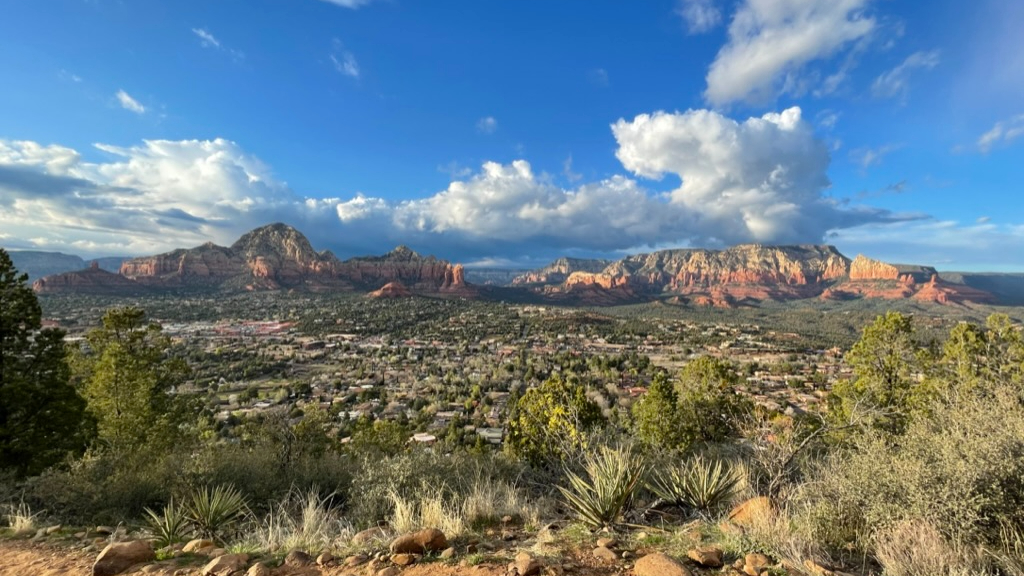
(Side note: I didn’t hit the darkroom for this one…)
When I think about the difference between that process and how we take pictures today, I know some people might say “Why would we ever go back?” But there was something in it that I don’t get from taking pictures anymore. Don’t get me wrong, I still love photography. Always have and always will—in all its forms. It’s my favorite of all the art classes I took. But the “darkroom way” will always hold a special place in my heart. The tactile experience of handling all the pieces and seeing it come together with a little bit of luck and a little bit of magic—it was almost meditative. Some people say you can taste love in the food that they cook. I like to think the same thing about the pictures I take, and when I ran through that process, it provided so many opportunities for me to add a bit of myself along the way.
When I travel, I find myself gravitating back toward my love of photography. Not just for the sake of taking pictures, but to try and fully capture a moment. The spirit of it. The essence. The light. What I was feeling. For me, that’s the real beauty of art—to look at something and experience how it makes me feel. To be transported to another time and place. Even if just for a few seconds. And even better if you can make someone else feel something, too.
Those seemingly small and fleeting moments can be some of the most impactful we’ll ever experience.
“Slow down and listen to the way your heart beats; a subtle act of resilience right here in the wild of things.”
Morgan Harper Nichols
Lists will always be there. But there are so many other things in this world that won’t. Let’s keep those to dos in their place and not forget to embrace what’s happening in our lives now. I don’t want to look back and wish I had been paying closer attention to the things that really mattered. The beauty in the world that would otherwise pass me by, unnoticed.
Let’s encourage ourselves and each other to be fully in the moment. In our conversations. On our travels. In our experiences. Eating our meals. On our walks.
Instead of grabbing our phones and snapping a million pics to post on the ‘gram, let’s opt for the darkroom way of living—approaching each moment with our undivided attention, adding a little love along the way, appreciating each part of the process, witnessing things unfold, taking the time to breathe in between the steps, and watching as the picture gradually comes into focus on the paper. You might be amazed at what you find once it comes fully into view. The unexpected surprises are sometimes the best gifts you’ve ever been given, so let’s slow down and make space for them. Let’s allow ourselves to feel, to be transported, to be inspired, to be moved.
And to live. Fully present.
1 If you’ve never heard of 35mm film photography, here’s your tutorial.
2 If you need a start to a darkroom playlist of your own, here are some artists to try (in no particular order and inspired by what I used to listen to when I would develop prints): Alicia Keys, Coldplay, P!nk, Lauryn Hill, U2, Fleetwood Mac, Justin Timberlake, Dave Matthews Band, Nickel Creek, Prince, Allman Brothers Band, Foo Fighters, Beck, The Smashing Pumpkins, Pearl Jam, No Doubt, Usher, Elton John, Alanis Morissette, Goo Goo Dolls, Gin Blossoms, Hole, Melissa Etheridge, Radiohead.
Bonus points if you can guess when I took these classes based on some of my playlist artists.
 Follow the Spark